

New analysis from Seniors First has identified the locations where Reverse Mortgages are most commonly appearing within its customer portfolio — and the results reveal a clear national pattern.
From the Central Coast and Tweed region in New South Wales to Ballarat, Bendigo, the Gold Coast and Hervey Bay, many of Australia’s Reverse Mortgage hotspots are places where older homeowners have strong ties to their homes and communities.
Rather than selling and downsizing to release money, a growing number of homeowners are exploring whether they can use some of their home equity while continuing to live where they are.
The data also challenges the idea that Reverse Mortgages are limited to one type of borrower or property market. The leading locations include affluent metropolitan suburbs, coastal retirement destinations, outer-suburban growth corridors and major regional centres.
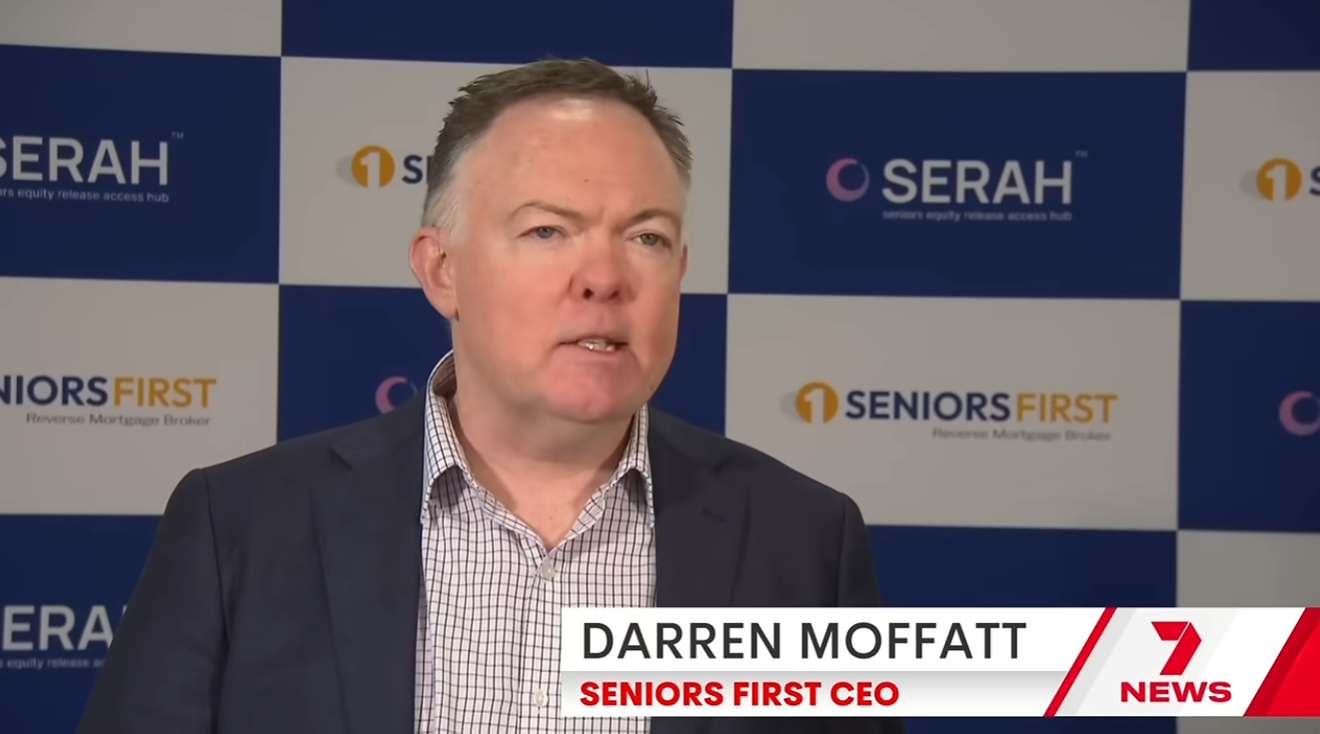
These findings are so compelling that Channel 7 National News ran a full TV story, ‘Reverse Mortgage Surge’, based on Seniors First data. Watch the video HERE.
What the Seniors First data measures
The rankings are based on the concentration of Reverse Mortgage customers within the Seniors First portfolio, which covers thousands of borrowers across New South Wales, Victoria and Queensland.
The sample represents approximately 7 per cent of the total 40,000 households with a Reverse Mortgage product in Australia. So the results are indicative of the broader market, and provide a useful picture of the communities in which older homeowners are actively using housing wealth to support their retirement.
Across the portfolio, the average customer age is approximately 73. This helps explain the strong representation of established retirement destinations, coastal communities and areas with a high proportion of long-term homeowners.
New South Wales: Coastal and lifestyle regions lead
The five leading New South Wales postcodes in the Seniors First portfolio are:
| Postcode | Location |
| 2068 | Northbridge and Sydney’s Lower North Shore |
| 2259 | Northern Central Coast |
| 2261 | The Entrance and surrounding Central Coast suburbs |
| 2486 | Tweed Heads South and Banora Point |
| 2540 | Jervis Bay and the wider Shoalhaven region |
Four of the five locations are coastal or lifestyle regions.
The Central Coast, Tweed region and Jervis Bay have long appealed to retirees because they combine access to services with a more relaxed lifestyle. Many residents have also owned their properties for a considerable period and accumulated substantial home equity.
Northbridge represents a different part of the market: long-term homeowners in a valuable Sydney suburb who may have significant property wealth but comparatively limited retirement income.
Seniors First CEO Darren Moffatt said the results demonstrate how strongly older Australians value their location and community.
“These are the types of places many Australians dream of retiring to,” Mr Moffatt said.
“It makes sense that homeowners are looking for ways to stay and enjoy the lifestyle they have built, rather than feeling they must sell simply to access more retirement funding.”
The NSW results also show that Reverse Mortgage customers are not concentrated only in lower-value housing markets. They include people with substantial property assets who may still experience a gap between their available income and the cost of maintaining the retirement lifestyle they want.
Victoria: Regional centres, Melbourne and the west
Victoria presents a broader mix of locations:
| Postcode | Location |
| 3000 | Melbourne CBD |
| 3029 | Hoppers Crossing, Tarneit and surrounding suburbs |
| 3030 | Werribee, Point Cook and surrounding suburbs |
| 3350 | Ballarat |
| 3550 | Bendigo |
The Victorian data points to three distinct groups.
The first is inner Melbourne, where some older owners hold valuable apartments or investment properties but may have limited liquid savings.
The second is Melbourne’s western growth corridor. Areas including Hoppers Crossing, Tarneit, Werribee and Point Cook contain many established family homeowners who are now approaching or entering retirement.
The third is the major regional centres of Ballarat and Bendigo. These areas offer established communities, healthcare, transport and services, while generally remaining more affordable than metropolitan Melbourne.
Despite these differences, the underlying issue is similar: people may own a valuable property but still need more accessible money for living expenses, debt repayment, healthcare, home improvements or a more comfortable retirement.
Why staying home mattered to Graham
Victorian retiree Graham and his wife began considering their options after watching their retirement savings reduce.
Having been married for 56 years and lived in three homes together, they initially considered selling and moving to a smaller property or retirement village.
However, the nearby retirement units they inspected were smaller, often involved different ownership structures and would have required them to meet the costs of selling, purchasing and moving.
Graham compared those costs with the projected interest on a Reverse Mortgage.
After considering the figures, the couple decided remaining in their existing home was the better option for them.
They now receive a regular monthly amount and have access to additional funds for emergencies or helping their family.
For Graham, the benefit was not purely financial.
“Being able to stay in your own home gives great peace of mind,” he said.
“Your neighbours, your friends and the places you love have a value that is hard to put into monetary terms.”
Queensland: The Gold Coast dominates
Queensland’s leading postcodes are:
| Postcode | Location |
| 4212 | Helensvale and the northern Gold Coast |
| 4215 | Southport |
| 4218 | Broadbeach |
| 4655 | Hervey Bay and the Fraser Coast |
| 4670 | Bundaberg, Bargara and surrounding communities |
Three of the five leading Queensland postcodes are on the Gold Coast.
This is not surprising. The Gold Coast has a large and established retiree population, supported by warm weather, healthcare services, beaches, major shopping centres and extensive retirement and aged-care infrastructure.
“Between the climate, lifestyle and healthcare, the Gold Coast is genuinely one of Australia’s most attractive places to retire,” Mr Moffatt said.
“Homeowners are realising their property may be able to help fund their retirement without requiring them to give up the home and lifestyle they have worked hard to build.”
Hervey Bay, Bundaberg and Bargara represent the other side of Queensland’s retirement market: more affordable coastal and regional communities with strong lifestyle appeal.
These areas are popular with older Australians who want access to services and the coast without the property prices or congestion of a capital city.
A temporary funding bridge for Shane
Queensland homeowner Shane began exploring his options after a period of poor health.
When his health improved, he decided to retire early at 56 so he could make better use of the years ahead. However, he needed additional money to support himself until he could access his superannuation.
Shane initially considered selling his mortgage-free home and moving into an apartment.
After comparing the likely costs of selling, buying and moving with the projected cost of a Reverse Mortgage over several years, he decided to remain in his house.
For Shane, the Reverse Mortgage acted as a temporary funding bridge.
“It has given me the confidence to retire and live comfortably,” he said.
His experience shows that Reverse Mortgages are not always intended to provide permanent retirement income. In some cases, they may be structured to meet a defined need over a particular period.
Why more homeowners are considering alternatives to downsizing
Selling and downsizing can be appropriate for some people, particularly when a home has become too large, difficult to maintain or unsuitable for ageing safely.
But downsizing is not a simple financial transaction.
It can involve agent commissions, stamp duty, legal fees, removal costs, renovations, new furniture and potentially significant lifestyle compromises. Suitable smaller homes may also be difficult to find in the same neighbourhood.
There are emotional considerations as well.
The family home may be close to friends, doctors, shops, family members and familiar community services. Leaving can mean giving up support networks that have taken decades to build.
The Seniors First hotspot data suggests many older homeowners are considering another question:
Could I access some of my equity without having to move?
For eligible homeowners, a Reverse Mortgage may provide access to funds as a lump sum, regular instalments, a cash reserve or a carefully structured combination.
The loan is secured against the property. Regular repayments are generally not required, although voluntary repayments may be possible. Interest is added to the loan balance, which means the amount owed grows over time and reduces the homeowner’s remaining equity.
A Reverse Mortgage should be carefully structured
A Reverse Mortgage is a significant financial decision and will not suit every homeowner.
The amount borrowed, the timing of each drawdown and the length of time the loan remains in place can all have a major effect on the eventual interest cost. That’s why it’s best to use a specialist Reverse Mortgage broker.
Taking the entire approved amount as a lump sum may result in unnecessary interest if some of the money is not needed immediately. A combination of an initial amount, regular instalments and a cash reserve may be more appropriate in some circumstances.
Older homeowners should understand:
- why they need the money;
- how much they are likely to need over time;
- how interest will accumulate;
- how much equity they may retain;
- whether other options are available; and
- how the decision may affect their longer-term plans and estate.
Australian consumer credit law also contains requirements specifically applying to Reverse Mortgages, including equity projections, prescribed information, independent legal advice and protections governing what happens when the property is eventually realised.
Home equity is becoming part of the retirement conversation
The most important finding from the Seniors First data is not that one postcode ranks above another.
It is that older Australians in very different housing markets are confronting the same challenge: much of their wealth is held in their home, while the money available to fund everyday retirement may be limited.
For some, selling will remain the right decision.
For others, carefully releasing a portion of their home equity may provide the money they need while allowing them to remain close to their family, friends and community.
The goal should not be to borrow as much as possible. It should be to find the safest and most suitable way to meet the homeowner’s needs while preserving as much future equity as reasonably possible.
Seniors First has helped older Australians explore Reverse Mortgage options since 2006. Through the SERAH™ online portal, homeowners can access easy-to-follow educational videos, use a Reverse Mortgage calculator, ask questions and connect with a specialist Reverse Mortgage broker.
To learn more, visit SERAH™ or book a no-obligation consultation with Seniors First.
Important information: This article contains general information only and does not take into account your personal objectives, financial situation or needs. Reverse Mortgage interest compounds over time and reduces the equity remaining in your property. Consider obtaining independent financial and legal advice before making a decision.